
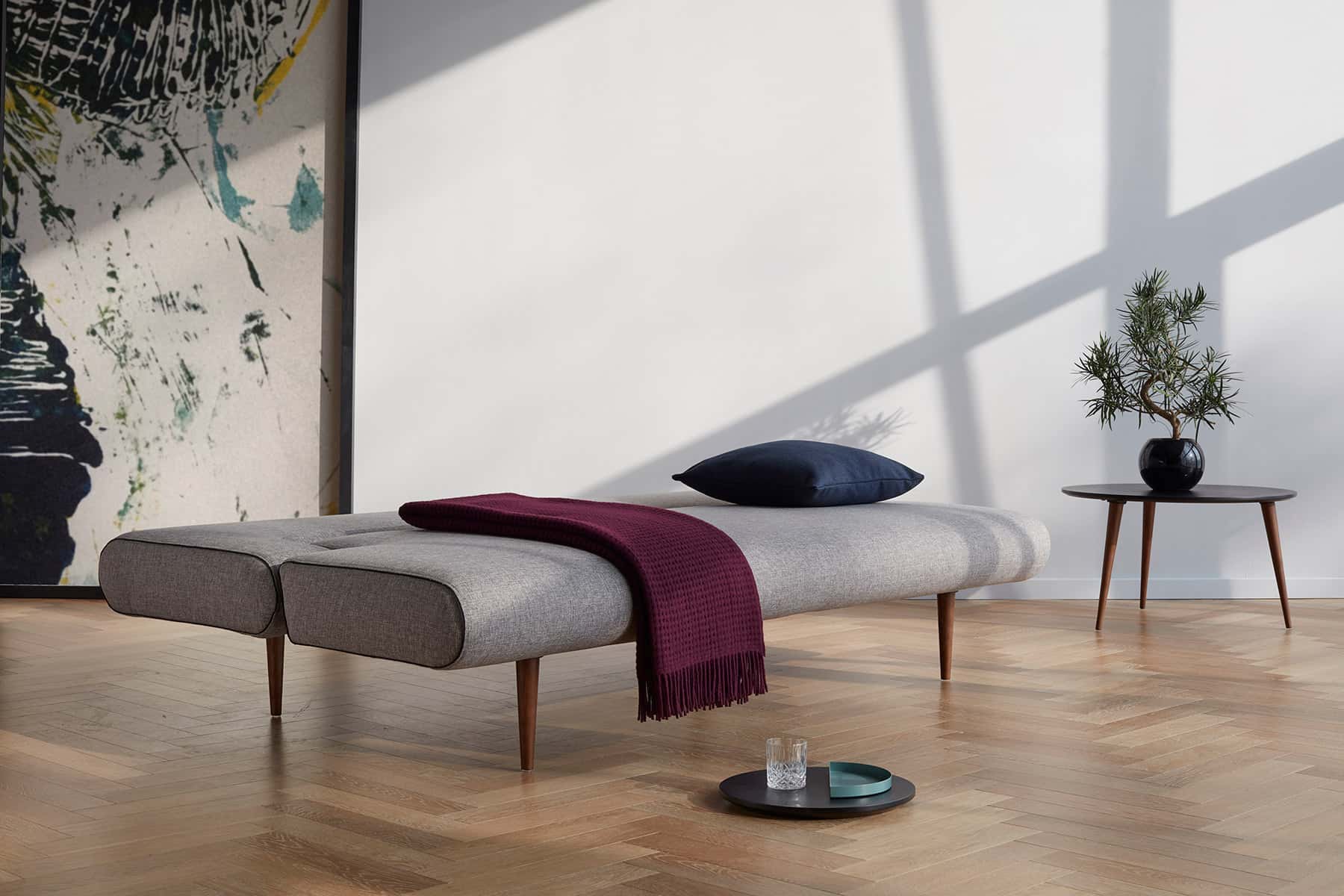
A sofa is one of the largest, most expensive, and longest-lived purchases in most homes, and it’s also one people tend to shop for the way they shop for smaller furniture — mostly on looks, in a showroom, without checking the things that actually determine whether it holds up. Here’s a full framework for the decision, along with when a standard sofa isn’t actually the right category for your situation.
Frame construction: the part nobody sees, and the part that matters most
The frame is what everything else sits on, and it’s completely invisible once the sofa is upholstered — which is exactly why it’s the easiest thing to get wrong as a shopper. A weak frame means sagging, creaking, and eventual failure regardless of how good the cushions or fabric are.
Kiln-dried hardwood is the standard for a well-built frame. Kiln-drying removes moisture that would otherwise cause the wood to warp or crack over years of use. Softwoods and non-kiln-dried wood are cheaper but considerably more prone to failure.
Joinery matters as much as the wood itself. Corner blocks, dowels, and glued-and-screwed joints hold up far better than staples or nails alone. This is nearly impossible to check by looking at a finished sofa, so ask directly, or look for manufacturers who publish frame construction details rather than staying vague.
Metal frames show up in some modern and convertible designs, and can be just as durable as wood when engineered well — particularly relevant for anything with a folding or converting mechanism, where metal handles repeated motion more predictably than wood joinery does.
Cushion fill: comfort now versus comfort in five years
High-resilience (HR) foam holds its shape considerably longer than standard foam, resisting the flattening and sagging that makes an older sofa feel worn out even when the frame is fine.
Down and down-blend cushions feel plush initially but require regular fluffing to maintain their shape, and they compress more over time than foam does. They’re a legitimate choice if you’re willing to maintain them, less so if you want a low-maintenance sofa.
Spring-based support systems, particularly in seat cushions, add durability and even weight distribution that foam alone doesn’t provide, especially on wider seats.
Upholstery: durability is a number, not a guess
Fabric durability is measured by abrasion resistance, most commonly reported as a Martindale rating — the number of rub cycles a fabric survives in a standardized test before showing wear. Higher numbers mean more resistance to everyday wear, pet claws, and general friction. If a retailer can’t tell you the Martindale rating or equivalent durability figure for a fabric, that’s worth treating as a gap in what you know about the purchase, not a minor omission.
Leather trades differently — it doesn’t pill or fray the way fabric can, but it shows scratches and requires its own care regimen. Performance fabrics, treated for stain and water resistance, are worth the premium if the sofa will see kids, pets, or heavy daily use.
Size and scale: measure twice, more than any other furniture category
A sofa is one of the few pieces of furniture where “measure the room” isn’t enough — you also need to measure the delivery path. Doorways, hallway turns, stairwell landings, and elevator dimensions all constrain what can actually reach your living room, and a sofa that fits the room perfectly is still the wrong purchase if it can’t get there.
Depth matters as much as width. A deep sofa can look proportionally correct in a large room and completely overwhelm a small one, even at the same width as a shallower alternative.
Arm style changes overall width more than people expect. Slim or armless configurations on an otherwise identical frame can shave several inches off the total footprint without changing the seating area — often the easiest lever to pull if a sofa you like is slightly too wide for the space.
When a standard sofa isn’t actually the right category
Here’s the question worth asking before you finalize anything: does this room ever need to sleep someone?
If the answer is genuinely never, a standard sofa is the right category, and everything above applies directly. But if the space doubles as a guest room, if you’re furnishing a studio where the sofa is also your own bed, or if overnight guests are a regular enough occurrence that an air mattress on the floor has become the default, a sofa bed solves a problem a standard sofa can’t — and it’s worth evaluating as its own category rather than an afterthought.
The mistake to avoid is treating a sofa bed purchase like a regular sofa purchase with a bonus feature. It isn’t. A convertible piece adds an entirely new set of decisions — mechanism type, mattress construction, comfort system — that a standard sofa purchase never has to consider, and getting those wrong is a bigger problem than picking the wrong fabric.
What changes once a mattress is involved
Frame construction now has to support daily folding, not just static weight. This is where mechanism design and metal frame construction, discussed above, become directly relevant rather than optional considerations.
“Cushion comfort” becomes “mattress comfort,” and it’s a completely different question. A sofa’s seat cushions and a sofa bed’s actual sleeping mattress are different components serving different purposes, and evaluating one doesn’t tell you about the other. Innovation Living’s collections are built around named comfort systems specifically because this distinction matters — see our guide to sofa bed comfort systems for how construction translates into actual sleep quality, something a standard sofa buying guide never has to address.
The mechanism itself becomes a real decision. How the piece converts, how many steps it takes, and whether it needs a new step every time you get in and out of bed all become part of the purchase in a way they simply aren’t for a fixed sofa. Our full sofa bed buying guide walks through this decision the way this article walks through a standard sofa.
If you’ve landed here because your “sofa” search turned into a “sofa bed” need
That’s a common path, and it’s worth taking seriously rather than defaulting to whatever convertible option is cheapest or most convenient. Innovation Living builds its entire range of sofa beds around the idea that a convertible piece should perform as well as a dedicated sofa and a dedicated bed — genuine frame construction, purpose-built mattresses rather than a pad over a folding metal bar, and mechanisms engineered for daily use rather than occasional guest duty. If comfort for actual nightly sleeping is part of your requirement, that’s worth confirming directly — not every convertible sofa on the market is built for it, covered in our guide to choosing a sofa bed for everyday sleeping.
Frequently asked questions
What’s the most important thing to check before buying a sofa? Frame construction — kiln-dried hardwood with real joinery, or a well-engineered metal frame for convertible pieces — since it’s invisible once upholstered but determines whether the sofa holds up over years of use.
How do I know if a fabric will hold up to daily use? Ask for the Martindale rating or equivalent abrasion resistance figure. Higher numbers mean better resistance to wear from sitting, pets, and general friction.
When should I consider a sofa bed instead of a regular sofa? If the room ever needs to sleep someone — a studio, a guest room, or a space where overnight guests are common enough that you’re currently using an air mattress — a sofa bed solves a problem a fixed sofa can’t.
Is buying a sofa bed the same process as buying a regular sofa? No. A sofa bed adds mechanism type and mattress comfort system as real decisions on top of everything a standard sofa purchase involves. Treat it as its own category rather than a regular sofa with an extra feature.
Whether you need a fixed sofa or a genuine sofa bed, the frame and construction fundamentals above apply either way. If your answer to “does this room need to sleep someone” is yes, our complete sofa bed buying guide picks up from here, or browse Innovation Living’s full collection directly.