
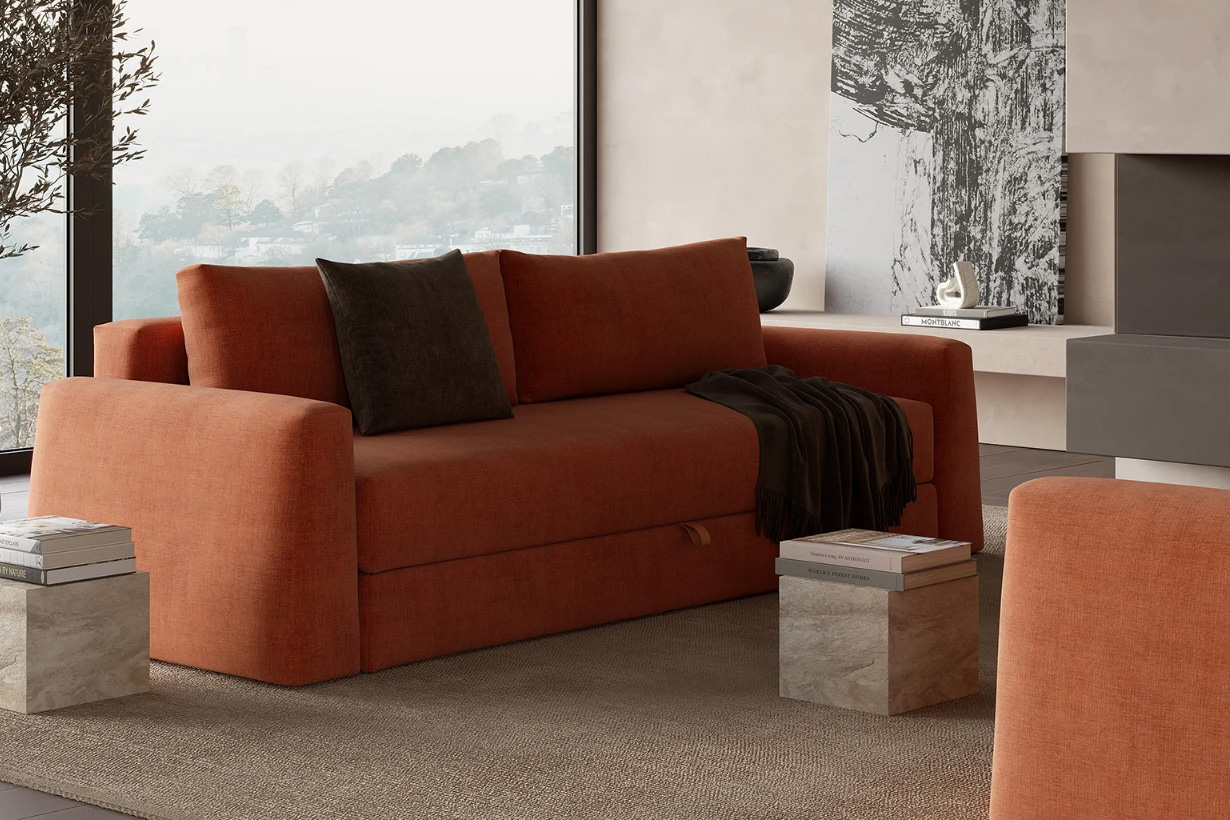
No furniture manufacturer publishes a reliable “X years” lifespan figure, and any number you see quoted for a sofa bed’s lifespan — including anywhere on the internet — is an estimate at best, not a verified fact. What’s actually knowable and worth relying on instead: what the warranty covers, which construction factors hold up under repeated use, and what care practices actually extend a piece’s working life. Those are the levers you can evaluate before buying, rather than a number nobody can really promise.
What the warranty tells you
Innovation Living offers a 5-year limited warranty covering gears and mechanisms, wooden frames, metal frames, and the spring, latex, or foam cores of sofa beds and chairs. This applies to private, residential use only — not commercial or rental applications — and requires the original purchase receipt along with photos or video clearly showing the defect, plus a photo of the product label found inside the piece.
A 5-year warranty on the mechanism specifically is meaningful, because the mechanism is the component that fails first on a poorly engineered sofa bed — the part doing repeated mechanical work every time the piece converts. Warranty coverage on gears and mechanisms, not just on the frame or fabric, is a reasonable signal that the manufacturer expects the conversion hardware to hold up under real use, not just the static structure.
What the warranty explicitly doesn’t cover: normal wear and tear, incorrect storage or installation, inappropriate use, abuse, misuse, alteration, wrong cleaning methods or products, outdoor or humid placement, and consequential or accidental damage. This is a standard set of exclusions across the furniture industry, not unusual to this brand — but it’s worth reading closely if you’re evaluating warranty coverage as part of your decision, since “wear and tear” is doing a lot of work in that list and covers a broad range of everyday use.
What actually predicts a longer working life
Since no verified lifespan number exists, the more useful exercise is looking at the construction factors that genuinely correlate with durability, based on how the mechanisms and materials are described.
Spring-based mattresses over pure foam. Every comfort system in this range except Carnell’s Dual Memory mattress uses individually pocketed springs, which hold their shape under repeated compression considerably better than foam alone. See our comfort systems guide for how the seven systems in this range compare.
Frame material matched to how often the piece converts. Metal frames handle repeated folding especially well, which is why they’re used on the systems built for frequent conversion. Solid wood frames, used on Newilla and Cubed, flex slightly under load rather than staying perfectly rigid — a different but equally deliberate engineering choice, not an inferior one.
Mechanism complexity. Simpler mechanisms generally have fewer parts that can wear or misalign over years of use. The one-motion designs with auto-fold legs — Neah, Vilander, and Carnell — reduce the number of moving parts involved in each conversion compared to mechanisms with more separate steps.
Fabric durability, for the upholstery specifically. This doesn’t affect the mattress or mechanism’s working life, but it’s often what actually drives a “time to replace” decision in practice — a structurally sound sofa bed with worn-through upholstery still reads as due for replacement. See our fabric guide for Martindale ratings across the range, which predict upholstery wear far more reliably than any general lifespan estimate.
Care practices that extend working life
Follow the specific wash and dry-clean guidance for your fabric, rather than treating all upholstery the same way. Using the wrong cleaning method or product is explicitly named as a condition that can affect coverage.
Avoid direct sunlight and heat sources. Both are called out specifically as causing fading, cracking, or surface distortion over time — positioning the piece away from a south-facing window or a radiator is a small placement decision with a real long-term payoff. See our fabric guide for colorfastness ratings if direct sun exposure isn’t avoidable.
Don’t force the mechanism. Every conversion mechanism is engineered to move a specific way; forcing a stuck or misaligned mechanism is a common cause of mechanical failure that’s avoidable with a bit of care during use.
Keep the piece appropriately maintained rather than ignored. Regular vacuuming, prompt attention to spills, and periodic inspection of the mechanism for anything unusual all fall under the kind of normal maintenance that keeps a well-built piece performing as intended for years.
When something goes wrong
If a defect does appear within the warranty period, the process is straightforward on paper: gather your purchase receipt, photograph or video the defect clearly, and locate the product label inside the piece. The manufacturer’s quality department reviews the claim and decides whether it’s covered, and if so, whether to repair or replace.
Keep your receipt somewhere you can actually find it — a warranty is only useful if you can produce proof of purchase when you need it, and this is worth doing at the time of purchase rather than trying to locate months or years later.
Setting realistic expectations
A well-constructed sofa bed, used as intended and cared for reasonably, should hold up to years of regular use — that’s a general expectation for furniture built with real spring mattresses and warrantied mechanisms, not a specific number this article can responsibly promise. If a specific timeframe matters to your decision — say, you’re furnishing a rental you plan to hold for a defined period — the warranty length (5 years) is the only figure the manufacturer itself is willing to commit to, and it’s a reasonable proxy for how long the company expects normal problems to take to surface.
Frequently asked questions
How long does the warranty last? 5 years, covering gears and mechanisms, wooden frames, metal frames, and spring, latex, or foam cores, for residential use only.
Does the warranty cover normal wear and tear? No. It covers defects in materials and workmanship, not the gradual wear that comes from years of ordinary use, misuse, incorrect cleaning, or damage from sunlight, heat, or humidity.
What predicts how long a sofa bed will actually last? Spring-based mattress construction, a frame matched to how often the piece converts, mechanism simplicity, and fabric durability all correlate with a longer working life — though no manufacturer publishes a verified number of years.
What should I do to make my sofa bed last longer? Follow fabric-specific cleaning guidance, keep the piece out of direct sunlight and away from heat sources, avoid forcing the mechanism, and maintain it the way you would any well-built piece of furniture.
What do I need to file a warranty claim? The original purchase receipt, photos or video clearly showing the defect, and a photo of the product label found inside the piece.
Construction quality and care matter more than any lifespan number a website could quote you. See our comfort systems guide and fabric guide for the specifics that actually predict durability, or get in touch with questions about warranty coverage for a specific model.